Reduce Delayed Customer Replies with a WhatsApp Marketing Platform

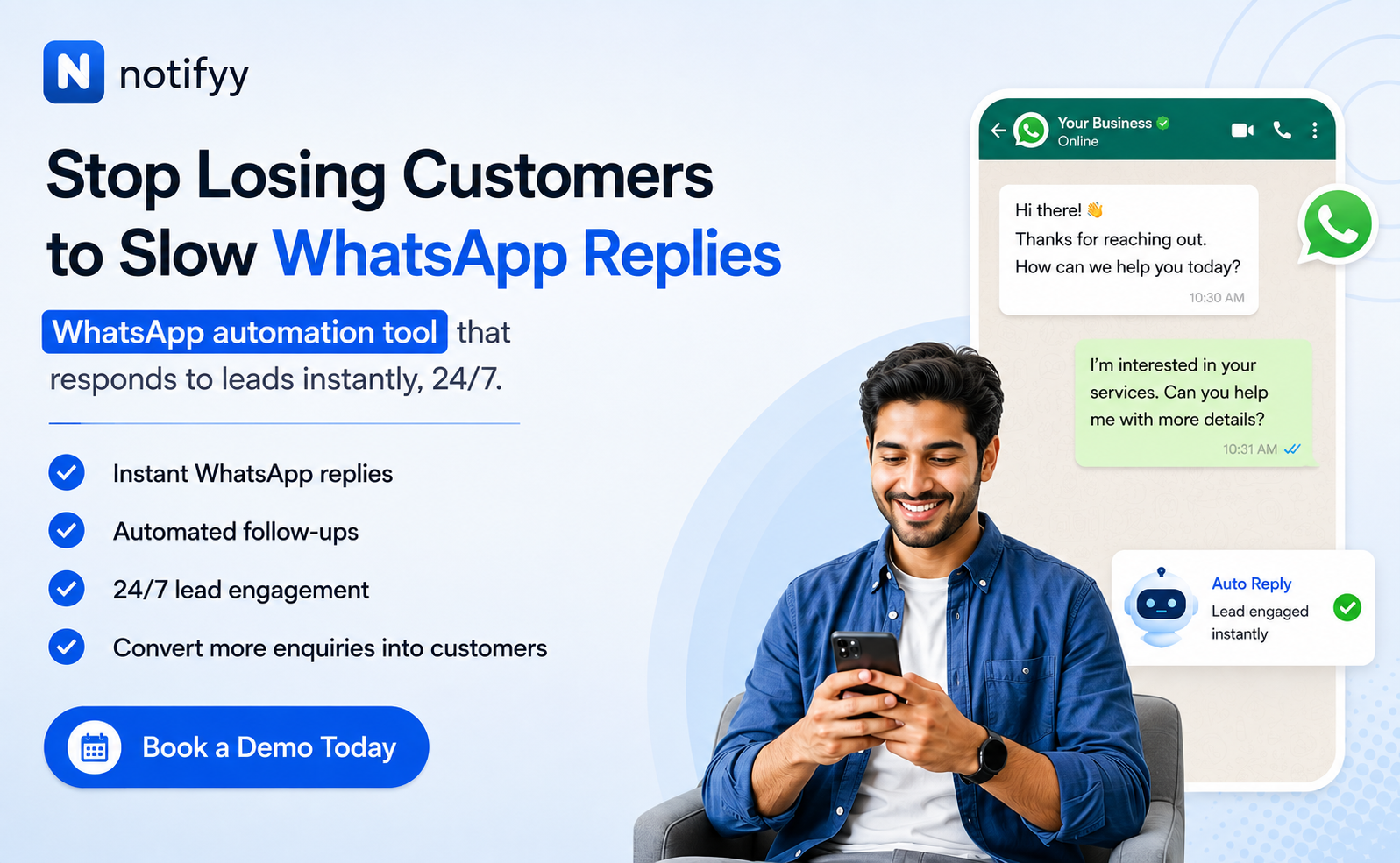
What happens when a customer messages your business on WhatsApp and nobody replies for the next two hours?
In most cases, the customer does not wait patiently. They continue searching, message another business, and often make the purchase elsewhere. That is why delayed WhatsApp replies are not just a support issue. They are a revenue issue.
A customer who sends a message is already showing buying intent. They may want pricing, availability, product details, a demo, or an appointment. When that moment of interest meets a delayed response, the opportunity can disappear quickly. This is where a whatsapp marketing platform and the right automation workflow can help businesses respond faster, capture more leads, and turn conversations into customers.
Why Delayed WhatsApp Replies Cost Businesses Customers
Response time shapes buying decisions. When customers reach out through WhatsApp, they expect a quick reply because the channel feels immediate and conversational. A delayed response creates uncertainty at the exact point where the customer is deciding whether to continue the conversation.
This becomes especially costly when the customer is asking high-intent questions about pricing, availability, delivery, appointments, or product details. If the business does not respond, the customer often does not wait. They move to the next option.
For businesses, every unanswered or delayed message can represent a missed lead, a lost sale, or a support experience that never gets recovered.
The Real Problem With Manual WhatsApp Management
Many businesses begin with a simple manual setup where one or two team members answer enquiries directly. That works at a low volume, but it becomes unreliable as message traffic increases.
Once teams start handling dozens or hundreds of conversations every day, important messages can get buried, follow-ups become inconsistent, and responses depend too heavily on who is available at that moment. In practice, this leads to missed first responses, delayed follow-ups, repeated answers to common questions, lost visibility into active leads, and an inconsistent customer experience.
For growing teams, a whatsapp marketing software workflow helps reduce dependency on manual response handling and creates a more structured communication process.
Customers Expect Fast and Consistent Replies
WhatsApp has become a preferred business communication channel because it feels simple and immediate. Customers use it when they want quick answers, not delayed callbacks.
This matters across industries such as e-commerce, real estate, healthcare, education, travel, restaurants, financial services, and local service businesses. In these industries, speed directly affects conversion. A fast first response can keep the conversation moving. A slow response can end the buying journey before it really begins.
How the Official WhatsApp Business API Solves the Response-Time Problem
This is where the official WhatsApp Business API becomes valuable for businesses that need scale, consistency, and better response management.
Instead of relying entirely on employees to manually answer every incoming message, businesses can automate the repetitive parts of the customer journey while still escalating high-intent conversations to the sales or support team.
For example, when a new enquiry arrives, the workflow can acknowledge the enquiry, answer common questions, collect customer information, qualify the lead, notify the sales team, and trigger a follow-up. This creates a more reliable communication flow and helps businesses evaluating a whatsapp api for business connect customer messaging with lead management and team workflows.
What Businesses Can Automate With a WhatsApp Marketing Platform
Instant customer responses
Customers receive an immediate first reply instead of waiting for an employee to become available.
Lead qualification
Businesses can ask structured questions to understand the enquiry before routing it to the right sales representative.
Automated follow-ups
If a lead does not respond immediately, the system can trigger appropriate follow-up messages instead of depending on manual reminders.
Order and booking updates
Businesses can send confirmations, reminders, and status updates through WhatsApp as part of the customer journey.
FAQ handling
Common questions about pricing, services, timing, availability, and process can be answered automatically to reduce repetitive workload.
Automation Should Improve Handoffs, Not Replace Your Team
One of the most common misunderstandings is that WhatsApp automation is meant to remove humans from the conversation. That is not the goal.
The purpose of automation is to handle repetitive first-level interactions so your team can focus on conversations where human judgment matters more. A customer asking for pricing basics may not need a sales rep immediately. A customer ready to buy, schedule, or negotiate does.
The strongest setup is a hybrid workflow where automation handles acknowledgement and early qualification, the system captures key details, and the sales or support team takes over when intent becomes clear.
Turn WhatsApp Conversations Into Qualified Sales Opportunities
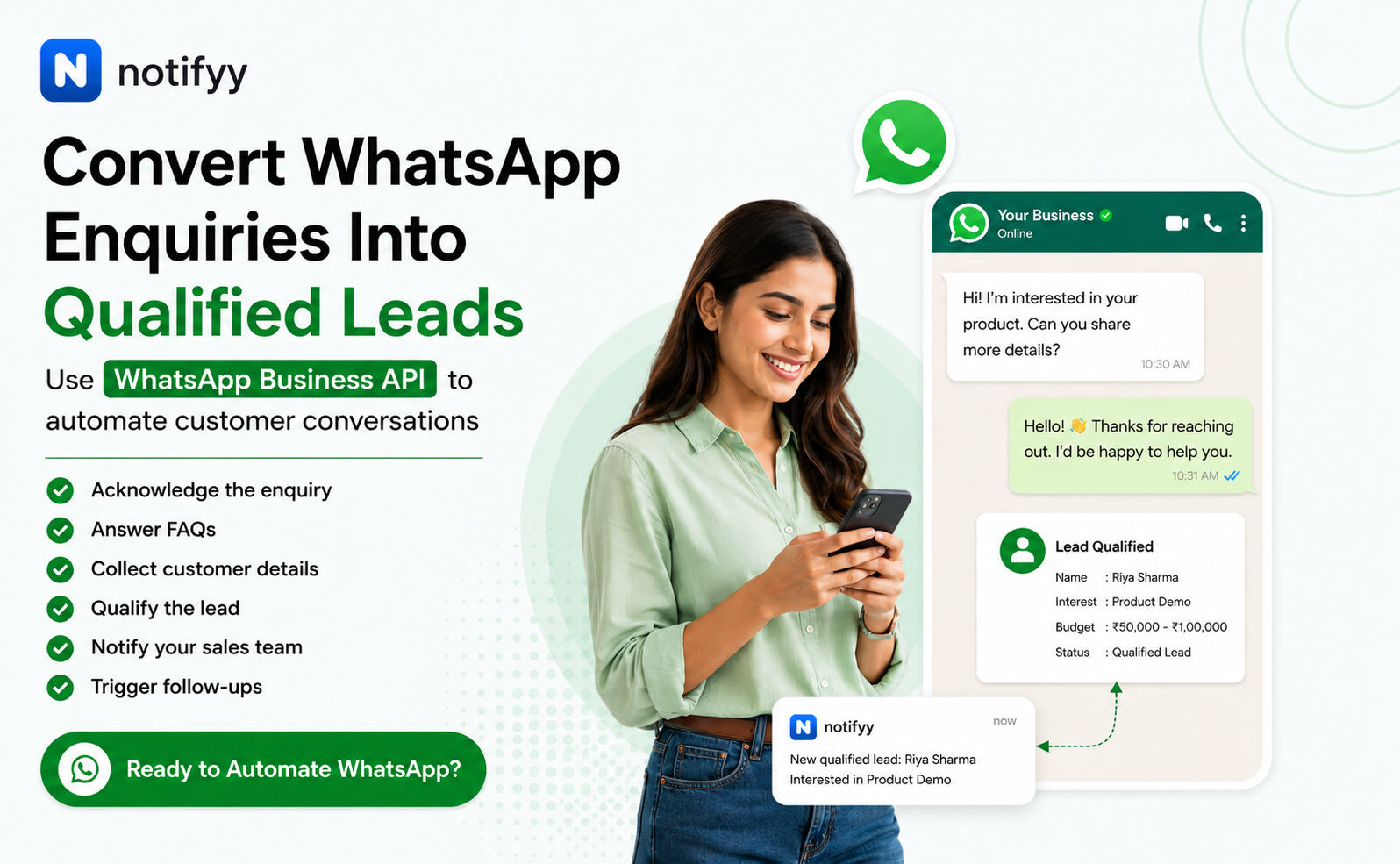
Your WhatsApp inbox should not be treated as a place where messages simply accumulate. It should function as a structured sales and customer engagement channel.
When the right workflow is in place, businesses can respond to customers faster, capture enquiries 24/7, reduce missed leads, automate repetitive conversations, improve follow-up consistency, reduce manual workload, provide more consistent communication, and connect WhatsApp with CRM and sales processes.
The goal is not to send more messages for the sake of volume. The goal is to make sure the right customer gets the right response at the right time.
Why Response Speed Needs CRM and Workflow Integration
Reply speed alone is not enough. If the business responds quickly but does not capture lead details, assign ownership, or trigger follow-up, the customer journey still breaks down later.
This is why businesses increasingly connect WhatsApp conversations to CRM records, lead stages, internal notifications, and follow-up workflows. Once the conversation becomes part of a structured process, teams gain much better visibility into who enquired, what they asked for, whether they were qualified, who owns the lead, and what should happen next.
This is where a modern whatsapp marketing platform creates enterprise value. It turns isolated conversations into trackable lead and customer workflows.
How Notifyy Helps Businesses Respond Faster
Notifyy helps businesses manage customer conversations, automate first responses, qualify leads, and connect WhatsApp communication with CRM workflows from one platform.
With the right setup, businesses can acknowledge enquiries instantly, reduce repetitive manual responses, trigger lead follow-ups, and route high-intent conversations to the right team member. That improves both customer experience and sales efficiency.
For teams comparing whatsapp api for business solutions, the real value comes from combining automation, lead visibility, CRM coordination, and scalable communication management in one workflow.
Are You Losing Leads Because Your Business Replies Too Late?
Every delayed WhatsApp reply can become a missed revenue opportunity.
If your team is struggling with growing enquiry volume, repetitive questions, slow first responses, or missed follow-ups, it may be time to move beyond manual WhatsApp management.
A strong whatsapp marketing platform helps businesses respond faster, manage conversations more efficiently, qualify leads earlier, and create a smoother path from first enquiry to conversion. For businesses evaluating a whatsapp api for business, the goal should not be automation for its own sake. The goal should be faster customer engagement, stronger lead handling, better team coordination, and a more reliable conversion process.
Ready to grow your sales with WhatsApp?
Start managing contacts, running campaigns, and automating workflows from one platform.