How the Best CRM Software Application Helps Businesses Close More Deals

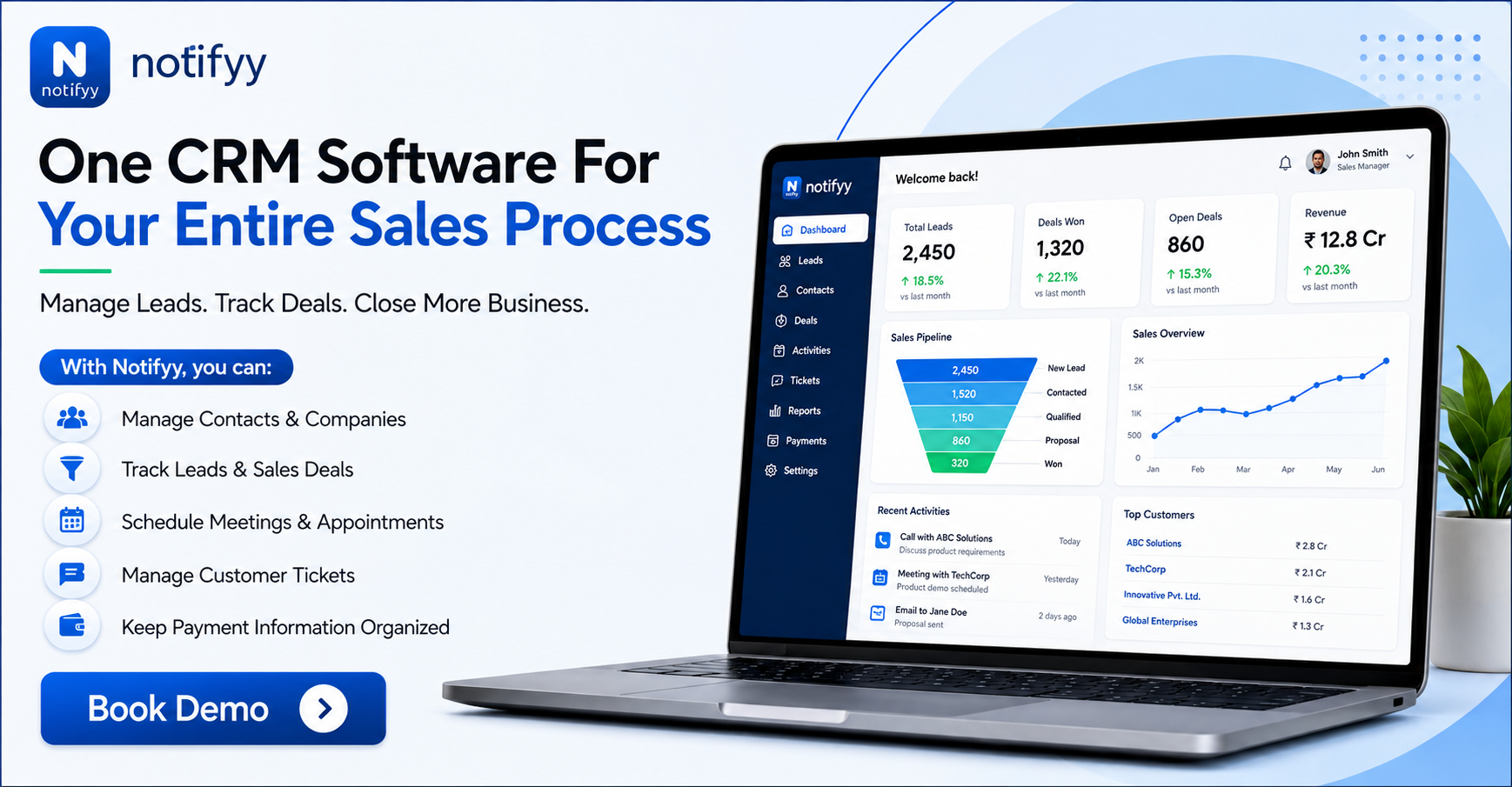
As businesses grow, managing customer information across spreadsheets, inboxes, and disconnected tools becomes harder. Sales teams may struggle to track leads, remember previous interactions, monitor deal progress, schedule meetings, and maintain visibility into payment-related conversations. These gaps make it easier for opportunities to stall and harder for teams to move deals forward consistently.
A CRM software application helps solve this by bringing essential customer and sales information into one place. Instead of switching between multiple systems, teams can manage contacts, companies, leads, deals, appointments, follow-ups, and customer history through a single workflow.
For startups, small businesses, and growing sales teams, the right CRM does not just organize information. It improves how teams manage the sales process from first enquiry to closed deal.
Why Businesses Lose Deals Without a Structured CRM
Many sales problems are not caused by weak demand. They are caused by poor process visibility.
When contact data is fragmented, deal notes are incomplete, follow-ups are missed, and meetings are tracked in separate places, sales teams spend more time searching for information than using it. This slows response times, weakens coordination, and makes it harder to understand where each opportunity stands.
As lead volume increases, these small process gaps become more expensive. Opportunities go cold, deal stages become unclear, and managers lose visibility into what the team needs to do next. This is one of the main reasons businesses adopt a CRM: not simply to store data, but to create a more structured and measurable sales process.
CRM Services for Managing the Sales Process
- Contacts to maintain customer details and communication context.
- Companies to connect accounts with associated decision-makers.
- Leads to track potential customers through the early sales process.
- Deals to monitor revenue opportunities and pipeline movement.
- Meetings to record important discussions and next steps.
- Appointments to manage scheduled interactions with prospects and customers.
- Tickets to retain support context that may affect the relationship.
- Payments to maintain visibility into payment-related activity tied to the customer journey.
Together, these capabilities help businesses maintain a clearer operational view of sales activity and customer context without depending on multiple disconnected systems.
How CRM Software Helps Close More Deals
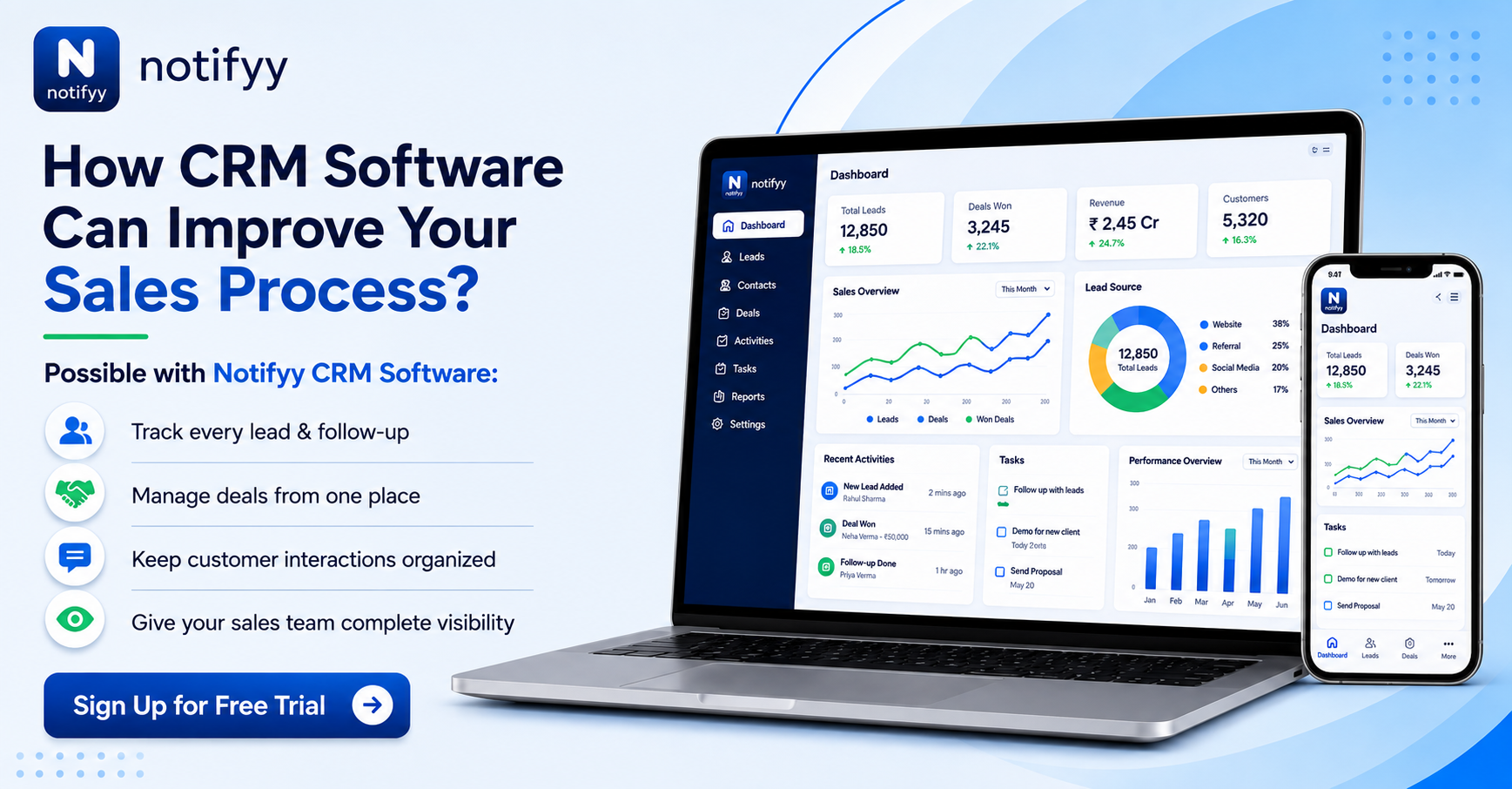
Create a complete opportunity view
When contact, lead, and deal data are stored in one system, representatives can quickly understand who the prospect is, what they are interested in, what has already been discussed, and where the deal currently stands.
Improve follow-up consistency
Deals often stall because the next action is unclear or not tracked properly. A CRM helps teams maintain follow-up discipline by recording previous interactions, upcoming meetings, pending tasks, and open deal status in one place.
Give sales teams pipeline visibility
Sales teams close more deals when they can see the pipeline clearly. A CRM helps representatives and managers understand which deals are new, progressing, stuck, or in need of immediate attention.
Connect sales activity with customer context
Meetings, appointments, support issues, and payment-related information all influence the customer relationship. When these are visible alongside customer and deal records, teams can make better decisions and maintain stronger continuity.
Support better decision-making for managers
Managers need visibility into lead volume, deal status, follow-up gaps, activity output, and revenue movement. A CRM improves operational control over the sales process.
Why CRM Matters for Small Businesses and Growing Teams
As a business grows, manual customer management becomes harder to sustain. This is especially relevant for teams evaluating CRM software for small businesses because early-stage sales processes often rely on memory, spreadsheets, and individual follow-up habits.
A centralized CRM helps small and growing teams organize leads, customer records, deals, appointments, support requests, and payment information without adding unnecessary complexity. It also gives owners and sales managers much better visibility into what is happening across the pipeline.
When comparing the best CRM tool for small business, companies should focus on whether the platform fits their workflow, supports day-to-day sales execution, and is simple enough for consistent team adoption.
What to Look for in the Best CRM Software in India
- Ease of use for sales and support teams.
- Lead and deal visibility.
- Contact and company management.
- Follow-up and activity tracking.
- Meetings and appointment coordination.
- Support and ticket context.
- Payment visibility.
- Scalability as the team and pipeline grow.
The best CRM software in India is not the platform with the longest feature list. It is the one that helps the team execute consistently, maintain visibility, and close more business.
How Notifyy Fits This CRM Workflow
Notifyy helps businesses manage contacts, companies, leads, deals, meetings, appointments, tickets, and payments through one centralized CRM environment.
That matters because sales performance improves when the team can access the right customer information at the right time. Instead of keeping relationship context spread across different systems, Notifyy gives teams a more connected view of the sales process and the customer journey.
For teams looking for the Best CRM software application for business, the value comes from operational clarity. A CRM should help the team respond faster, follow up more reliably, and manage opportunities with better structure.
Conclusion
Closing more deals is not only about generating more leads. It is also about managing those leads effectively once they enter the pipeline.
A strong CRM software application helps businesses create that structure by improving visibility into contacts, companies, leads, deals, meetings, appointments, tickets, and payments. When teams can manage this information from one place, they can work more consistently and move opportunities forward with better control.
If your business is still managing customer and sales information across multiple tools, moving to a centralized CRM can make the process more organized and help your team maintain a clearer view of customer relationships and revenue opportunities.
Ready to build stronger customer relationships?
Manage customer data, track opportunities, and automate workflows from one platform.