Common Sales Mistakes That Cloud Based CRM Software Can Prevent

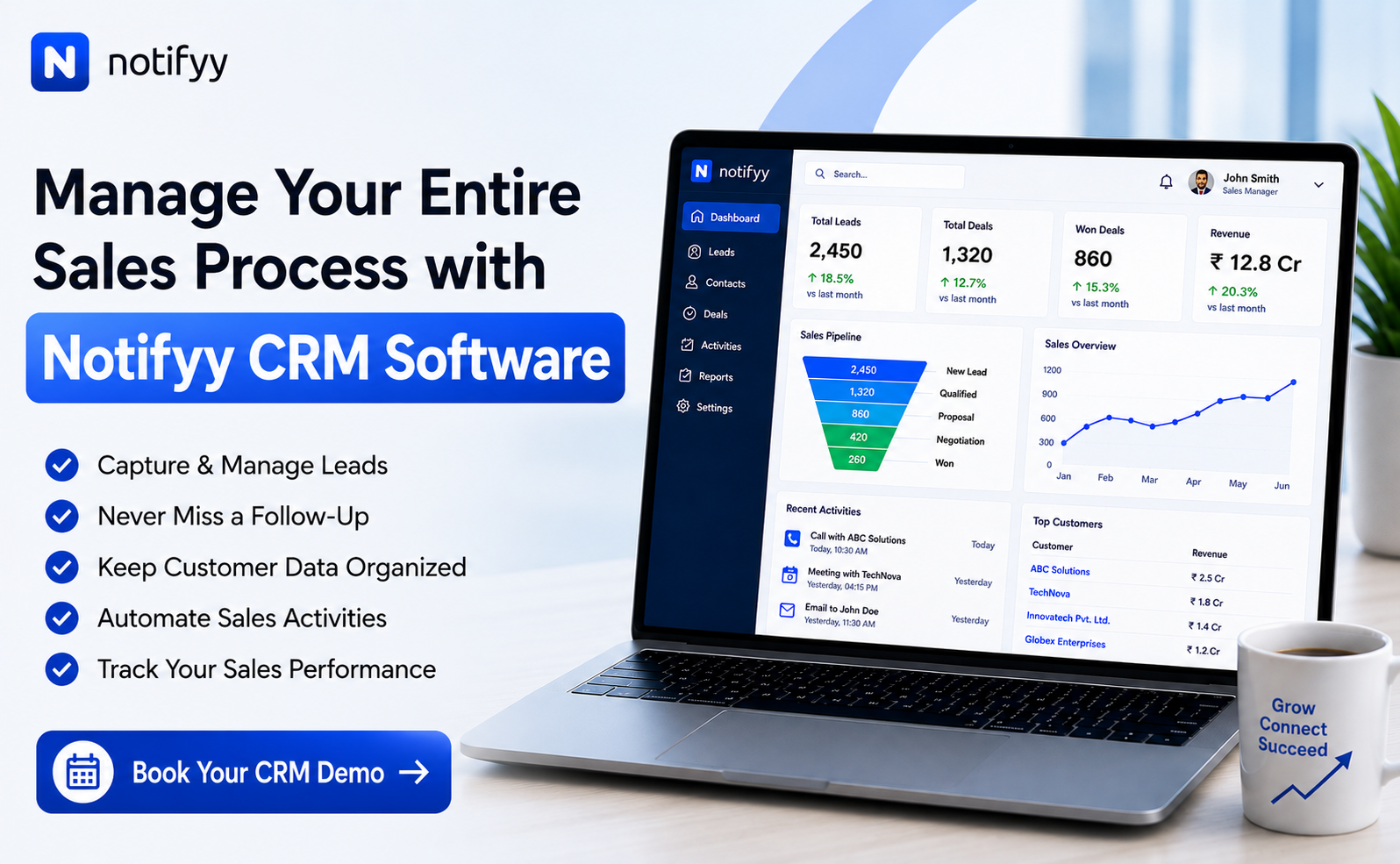
Sales teams do not usually lose opportunities because the product is weak. In many cases, they lose them because the sales process is inconsistent. Missed follow-ups, scattered customer records, unclear ownership, poor prioritization, and limited pipeline visibility can quietly reduce conversion rates over time.
This is where cloud based CRM software becomes valuable. A modern system gives sales teams a centralized place to manage leads, customer information, activities, opportunities, and follow-up tasks. Instead of working across spreadsheets, inboxes, and personal notes, teams can operate from one structured workflow with better accountability and better visibility.
For businesses trying to improve conversion performance, customer relationship management software does more than organize data. It helps prevent common sales mistakes before they start affecting revenue.
Why Sales Mistakes Often Come from Process Gaps
Most sales teams already know they should follow up quickly, maintain clean records, and prioritize the best opportunities. The real problem is execution at scale. As lead volume grows, manual systems become harder to manage.
When sales representatives rely on spreadsheets, inbox threads, messaging apps, and memory, important actions are easy to miss. A lead may sit untouched for days. A proposal discussion may not be recorded. A customer may receive inconsistent communication from different team members. Managers may not see pipeline issues until revenue is already affected.
These are not isolated mistakes. They are process failures, and a structured CRM is designed to prevent them.
Missing Follow-Ups
One of the most common sales mistakes is failing to follow up at the right time. A lead shows interest, a conversation begins, and then momentum is lost because the next action is not scheduled or tracked properly.
A modern CRM software application helps prevent this by giving teams a clear task system for follow-ups, reminders, activity tracking, and next-step visibility. Instead of relying on individual memory, sales representatives can see what is due, what is overdue, and what needs action first.
This matters because timely follow-up often determines whether an opportunity moves forward or disappears into a competitor's pipeline.
Losing Track of Leads Across Multiple Sources
Leads often come from websites, ad campaigns, referrals, social channels, calls, and inbound messages. Without a centralized system, teams may lose track of where those leads came from, what has already been discussed, or whether someone has already engaged with them.
CRM software for business helps consolidate lead information into one system where teams can organize prospects by source, stage, ownership, status, and next action. That makes the sales process more structured and reduces lead leakage.
For managers, this also improves accountability. Inactive opportunities become easier to identify, and leads that are stuck without action can be reassigned or reviewed before they go cold.
Poor Customer Data Management
Sales conversations are only as good as the information behind them. If contact details, interaction history, and account notes are incomplete or outdated, representatives are forced to sell without context.
Customer relationship management software helps businesses maintain more reliable customer records by centralizing contact details, company information, activity history, notes, and relationship context. This improves conversation quality because representatives can review the full customer picture before reaching out.
It also reduces duplicate records, inconsistent account information, and confusion between team members working on the same opportunity.
Inconsistent Sales Communication
Inconsistent communication creates unnecessary friction in the buying process. When multiple representatives contact the same account without clear visibility into earlier conversations, prospects may receive repeated questions, conflicting information, or disconnected follow-ups.
A company CRM software workflow improves consistency by giving teams shared access to communication history, meeting notes, past touchpoints, and open actions. Before contacting a prospect, a representative can review what has already happened and continue the discussion with context.
This improves professionalism and helps the customer feel recognized rather than repeatedly reintroduced into the process.
Failing to Prioritize High-Quality Leads
Not every prospect deserves the same amount of time. When sales teams treat every lead equally, high-intent opportunities may be delayed while low-fit prospects consume too much attention.
A strong CRM software application supports prioritization through lead stages, qualification structure, activity history, and opportunity tracking. In more advanced workflows, it can also support lead scoring, pipeline views, and better visibility into deal quality.
This helps sales teams spend more time on opportunities with real revenue potential and less time on low-conversion activity.
Lack of Sales Performance Visibility
Sales leaders need more than anecdotal updates. They need clear visibility into lead flow, conversion rates, pipeline bottlenecks, follow-up volume, activity output, and deal movement.
Without that visibility, it becomes difficult to understand whether the problem is poor qualification, slow follow-up, low response rates, weak handoffs, or stalled opportunities.
This is another reason cloud based CRM software matters. A cloud platform gives managers real-time access to dashboards, reports, and pipeline data so they can identify patterns early and improve execution before losses compound.
How CRM Prevents These Mistakes in Daily Sales Workflows
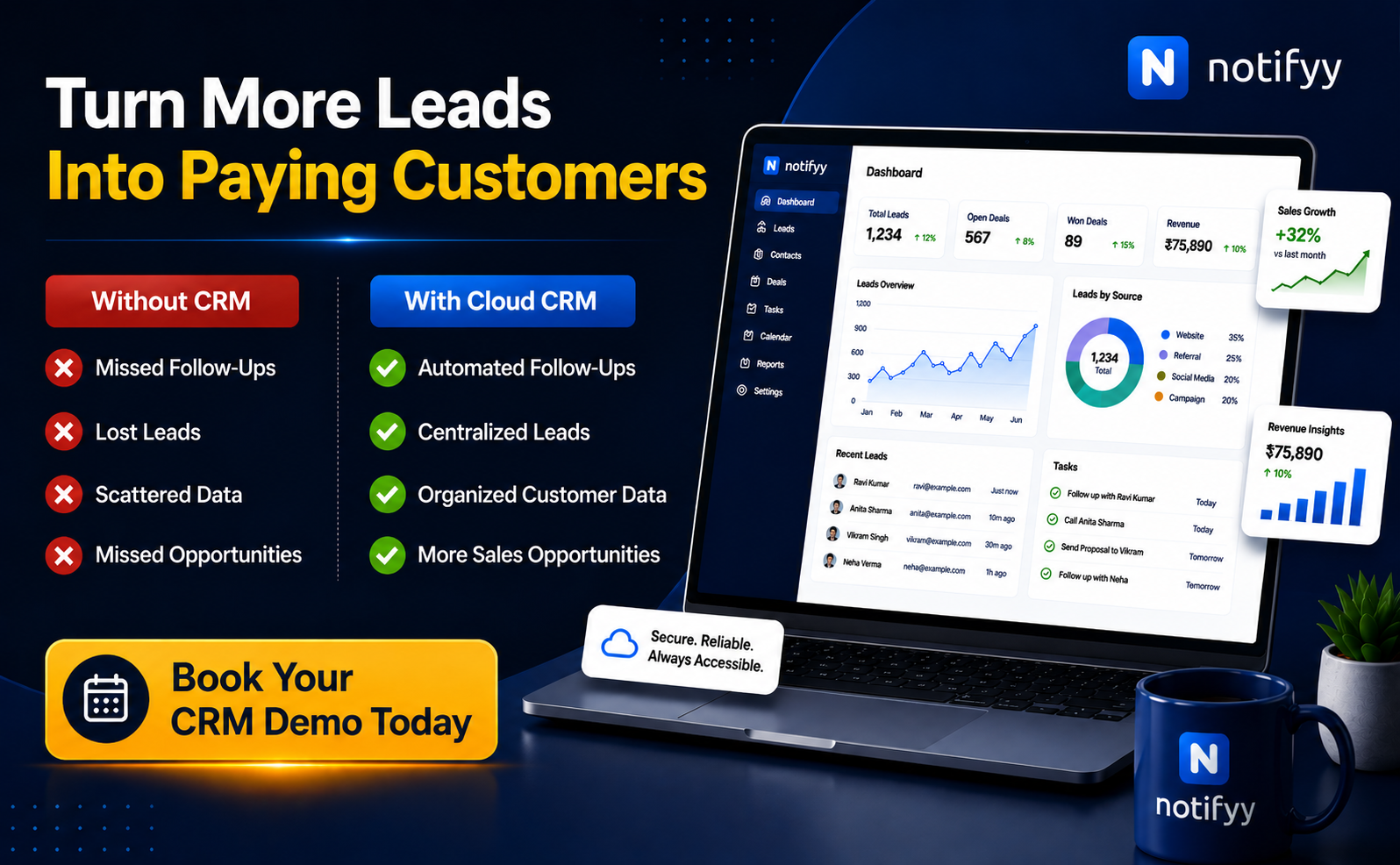
Capture inbound leads from multiple channels
Collect lead information from forms, campaigns, referrals, and direct outreach into one system so new opportunities are not lost between sources.
Assign ownership clearly
Make sure every lead, deal, and follow-up task has a responsible owner so accountability is visible across the pipeline.
Track every follow-up and next step
Use reminders, task lists, and activity timelines to keep momentum active across all open opportunities.
Maintain complete customer and company records
Store account details, notes, and communication history in one place so every conversation starts with context.
Monitor deal progress through visible stages
Pipeline visibility helps teams identify stalled opportunities, weak conversion points, and deals that need immediate attention.
Track team performance with dashboards and reports
Reporting helps managers understand where opportunities are lost and which workflows need improvement to support growth.
Why Cloud CRM Is Better for Growing Teams
As sales teams expand, they need systems that are accessible, collaborative, and easy to manage across locations. Cloud based CRM software gives teams shared access to lead data, follow-up schedules, activity timelines, and reporting without depending on office-bound systems or isolated files.
This is especially important for businesses with distributed sales teams, multiple offices, field teams, or managers who need visibility across the pipeline in real time. A cloud-first approach also makes it easier to scale workflows as lead volume, team size, and customer complexity increase.
How Notifyy Fits This Sales Process
Notifyy helps businesses create a more organized sales workflow by combining customer data visibility, lead tracking, follow-up structure, and performance visibility in one platform.
With Notifyy, teams can manage leads, contacts, companies, deals, tasks, and customer activity from a centralized environment. That makes it easier to reduce missed follow-ups, maintain cleaner records, and improve coordination across the sales process.
For businesses comparing company CRM software options, the value is not only in storing information. It is in making the sales process more consistent, more measurable, and easier to manage at scale.
Turn Sales Mistakes Into Growth Opportunities
The right CRM does more than record customer information. It helps sales teams build a structured process that reduces avoidable errors and improves conversion quality over time.
By preventing missed follow-ups, lead leakage, poor data management, inconsistent communication, weak prioritization, and limited reporting visibility, cloud based CRM software can help businesses create a stronger and more scalable revenue engine.
For businesses searching for CRM software for business, the goal should not be to adopt just another system. It should be to choose a platform that supports lead management, follow-up execution, pipeline visibility, customer context, and measurable sales improvement.
Ready to build stronger customer relationships?
Manage customer data, track opportunities, and automate workflows from one platform.